Female Indigenous Icons Changing the World One Step at a Time

Colombia:

Marylen Serna Salinas: This indigenous social leader has struggled to bring peace to Colombia as main spokesperson for the Minga Social and Community Resistance organization, Movimiento Campesino de Cajibio, National Agrarian Coordinator (CNA); Agrarian, Peasant, Ethnic and Popular Summit; the national representative of the Peoples Congress, and as a member of both the Women’s Movement for Life and the committee of the Social Table for Peace.
Over the last 30 years, Serna has lead numerous movements in defense of human rights as well as lead several Popular Summits to address campesino and ethnic violations. Her influence and insights from her the indigenous communities have provided a firm foundation for the Colombia’s peace talks with the guerrilla group, the National Liberation Army (ELN). It is due to her tireless efforts that the state has welcomed a National Negotiating Committee to help navigate the needs and rights of rural campesino communities.
Among the many causes Serna has adopted women’s rights, denouncing not only gender violence, but also the Colombian government’s failure to uphold the terms of the peace agreement, and the rise of paramilitary violence which has seen a surge over the last two years since the signing of the peace treaty in 2016.
Peru:

Tarcila Rivera Zea
A Quechua activist Rivera has been recognized both nationally and international human rights organizations around the world. Born in Vilcashuaman, Ayacucho, she has dedicated more than three decades to upholding the rights and dignity due to Quechuan culture and traditions. However, she says the fight for indigenous rights is not over.
“We remain impoverished, accessing services of low or no quality and our life systems (production of food, use of technologies, cultural practices, recognition of land and territory) are still questioned and are often persecuted and neglected in public media and formal education.”
Within her own community, the Peruvian woman founded the Chirapaq Center for Indigneos Cultures of Peru more than 25 years ago, which fosters indigenous pride for culture and tradition as well as recognition for indigenous rights.
In 2017, she was one of 14 experts handpicked to represent their communties in the Permanent Forum of the United Nations for Indigenous Issues. Rivera is also a member of the Board of directors of the Association for the Rights of Women and Development (AWID) and the Advisory Committee of the Bureau of Women Peruvian Parliamentarians.
A winner of the 2011 Visionary Award, Rivera has been noted for her “leadership, extraordinary vision and courageous work for the rights of indigenous women.”

Rosalía Yampis:
An Awajun leader from the province of Bagua, in the Amazonian region, Yampis has worked to empower women from her community as well as fight wide-range deforestation in the world’s largest tropical rainforest.
The environmental activist has spoken at numerous climate conventions to suggest alternatives to the “climate catastrophe” which has sent the worlds of Peru’s indigenous communities and economic infrastructures spinning. Yampis has pushed for the region’s indigenous women to work together, from the fishing districts to the agricultural sectors, to mediate the effects of climate change using secrets from the Amazon.
“Women have this ancestral knowledge about seeds and what we have to sow,” she told the media during the United Nations Climate Conference in Germany last year, explaining that in the Amazon, they are culturing plants that they believe can improve the water cycle, such as cacti, pine and eucalyptus.
Yampis is a dedicated activist and the coordinator of the National Organization of Andean and Amazonian Women (Onamiap) connected to the Advisor for the Interethnic Association for the development of the Peruvian Rainforest (AIDESEP), a 13 million member national association targeting at improving the health, education and housing of indigenous people.
Guatemala:

Aura Lolita Chavez Ixcaquic
“I come from K'iche,' where I was born, a territory where I have dreamed of being a defender with rebellion, resistance, with great Kamal inspirations of revolutionaries, I am a seed that walks towards life in fullness,” said Aura Lolita Chavez Ixcaquic, a 45 year old Mayan woman and former teacher, who has been forced into hiding for her social beliefs, environmental activism and influence in the indigenous communities.
Chavez, an energetic and charismatic leader, has gained support from across the board from her community to international rights bodies.
“I am a mother of two beautiful beings whom I love, I am a teacher, I am a defender of life and territories, a member of a movement of peoples, the "Council of the K'iche 'People, for the defense of Life, Mother Nature, Earth and Territory "(CPK),” she said, describing herself as one of many “that make up the haunted forests of feminist rebellions.”
"We live in a crucial moment in the defense of Mother Earth because it is impossible to continue legislating with environmentalist discourses when human lives are being massively destroyed,” the activist said, who has been persecuted and threatened by hydroelectric companies, monoculture companies, lumber companies, and paramilitaries.
"Transnationals, with total impunity, violate our collective and individual rights, kill us, imprison us, sexually violate us using false development as an argument and most companies are of European origin."
Last year, Chavez won the Lehendakari Iñigo Urkullu award in January in recognition of her efforts in defense of land, natural resources and exploited territory. She also qualified in the top three finalists for the Sakharov Prize for human rights 2017.

Otilia Lux de Coti:
In Guatemala, the development of indigenous women and girls are handicapped by gender violence, discrimination and racism, activist Otilia Lux says.
"Institutional violence is especially difficult where the rule of law is not for all citizens of the country," the activist said.
"In the case of Guatemala, indigenous women experience institutional violence in the field of mining, because as they are in the defense of land, territory and natural resources, women leaders face and say that the land it belongs to everyone, it is communal," she said.
Born in Santa Cruz, Lux- a Quiche Maya- has dedicated her life in defense of the rights of indigenous women around the world. A former executive director of the International Forum of Indigenous Women, Lux has also worked as a deputy of the United Nations Permanent Forum of Indigenous Peoples.
Following the end of Guatemala’s civil war, two decades ago, Otilia was as one of three members on the Historical Clarification of Guatemala Commission and played witness to over 7 thousand testimonies of war crimes from victims, which composed a report 12 volumes long. She recalled the imprisonment of two military officers accused of war crimes, rape, sexual slavery, forced disappearance, and discrimination against 11 indigenous women in the Sepur Zarco department.
She has advocated for indigenous rights across Latin America as well as women’s rights and equal representation in politics. Lux is a role model for women in her community as an educator, the executive director of the International Forum of Indigenous Women (FIMI), and Guatemala’s former Culture and Sports minister.

Rigoberta Menchu:
A Nobel Peace Prize winner and UNESCO Ambassador of Goodwill, Rigoberta Menchu has put Guatemala on the map. The Maya K’iche woman was born in Laj Chimel, San Miguel Uspantán and stands out as a fearless activist and social leader, parading human rights, particularly for women, and social equality for indigenous peoples.
Menchu has successfully instilled a sense of respect in both national and international organizations and carried the torch for peaceful dialogue in the region.
Menchu was especially active during the 80s’ and 90’s social activism and respect for human rights as the leader of the Continental Campaign for the 500 Years of Resistance Movement.
Since then, she has championed for women’s and youth rights and sustaining cultural and traditions, founding and participating in numerous organizations such as the Women's Initiative, Nobel Peace Prize Laureate, the Peace Jam Foundation, the National Directive Council of the Mayan Women's Political Association of Guatemala MOLOJ, and the National Autonomous University of Mexico (UNAM).
Chile:

Jeannette Paillán
Award winning filmmaker and journalist, Jeannette Paillan brings the Mapuche world and traditions to the big screen as one of the community’s first film directors. Appearing in the 2017 International Festival of Indigenous Cinema (FICWALLMAPU), Paillan competed with artists from across Latin America.
A former director of the Latin American Coordination of Cinema and Communication of Indigenous Peoples (CLACPI), the Mapuche woman was proud to enter the cinematic sphere, a world with few indigenous directors and event less female filmmakers, in order to provide a new look into the conflict issues in indigenous communities.
According to Paillan, her documentaries fight the typical stereotype attributed to indigenous people, especially mapuche, and “denounce the strategies of the great international corporations by expropriating and taking over the territory of her people."
“If indigenous peoples do not self-portray, if they do not tell their own stories or report these human rights violations to the relevant agencies, nobody will do it," she said.
“There is a very important percentage of indigenous peoples who are at risk of extinction and are living amid huge violation of their Human Rights..We are a people that have something to say.”
The country's largest native ethnic group continues to fight the government, despite violence from paramilitaries, in order to regain land lost during Chile's 19th Century expansion south, into Mapuche-held territory.
Argentina:

Milagro Sala
A matriarch of the 70,000 member-strong indigenous organization Tupac Amaru in Jujuy and former member of the Mercosur Parliament was arrested by Argentine authorities in January 2016 on allegations of public disturbance, fraud, money laundering, and illicit association.
She was the first political prisoner arrested in President Mauricio Macri’s administration and after suffering two years of arbitrary detention, she was finally released. Her activism in grassroots movements are legendary with some of the world’s most prestigious parties calling for her release. Even during her imprisonment, Sala launched a hunger strike to protest the inhuman and cruel treatment of her 25 female cell mates.
Her civil rights organization has continued to be active, protesting the upcoming labor reforms and austerity measures. “I believe in the unity of the grassroots (movements), in the unity of the people,” Sala says.
Mexico:

Maria de Jesus "Marichuy" Patricio
An Indigenous Nahuatl healer entered the race for Mexico’s 2018 presidential elections. With the support of the National Indigenous Congress (CNI) and the Zapatista Army of National Liberation (EZLN) behind her, Marichuy said “she promises nothing” but stood for women and indigenous rights.
“As a woman, as a mother, and as a worker, let me tell you something: we have to fight sexism. For them, common people don't exist. We have to organize, and end this capitalist, patriarchal and racist state,” she said, publicly refusing any government funding for her campaign.
Unfortunately, Marichuy was one of six women attempting an independent candacy who failed to collect the required number of signatures needed to appear on the July ballot. According to a report from Cimac Noticias, this could in part be due to uneven distribution to media coverage to their campaigns on the most popular television and radio spaces.
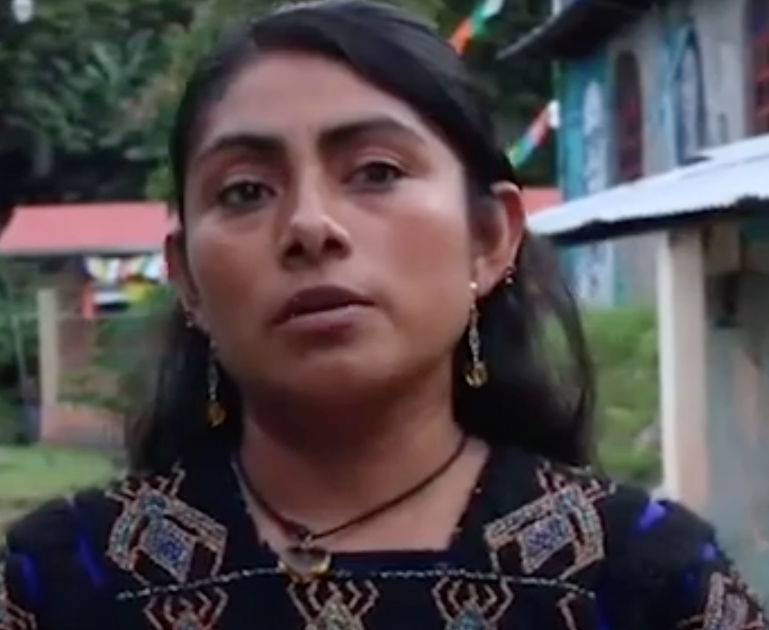
Guadalupe Vazquez Luna:
Dressed in the traditional purple tunic and black wool skirt, Guadalupe “Lupita” Vazquez stands tall and proud as a member of the Indigenous Council of Government, representing the Tsotsil people from the Alto-Centro region in Chiapas, Mexico. With 45 colorful crosses, the city is a daily reminder of the massacre of Acteal.
Lupita said she sees her status as a member of council as an opportunity to address the many issues in indigenous communities and convince them to join forces to make a change. Violence, forced disappearances, and human rights violations are only a few of the injustices which have mounted over the last 40 years.
"The idea is to organize ourselves and defend our lands, our lives and our rights," Lupita said. If government officials won’t help the communities, it’s up to the indigenous people to "build it from the ground up, looking for a way to live in peace."
Lupitaa has also made waves joining forces with the Zapatista Army of National Liberation (EZLN), to overthrow the confines of traditional women roles which dictate the laws of etiquette, marriage and submissiveness.
“My brother said that if they came to ask me (to marry), he would give permission as is the custom. I answered, 'Go ahead, let them come and say yes, but you will leave in my place'. They never ask me (to marry after that)."

Guadalupe Martinez:
Founder of the Alliance of Indigenous Women of Mexico and Central America, Martinez took a big step for native women, after announcing the launching of the News Agency of indigenous and Afro Descendent Women (NOTIMIA).
With the support from the UN-Women and the Spanish Agency for Inernational Cooperation (AECI), Notimia will provide a unique perspective in news coverage with 15 panels dedicated to reports on the Permanent Forum. The agency concentrates on disseminating news of indigneous communities and peoples in their own tongue as well as translate them into other languages.
With the motto, “voices, media and networks for peace," Martinez, a Nahuatl native, said the agency aims to give empowerment to women and provide a global platform for women to discuss indigenous issues. Already more than 500 native women are working in the field, circulating the news in 69 different languages.
Nicaragua:

Mirna Cunhingan
A Nicaraguan social activist, Mirna Cunningham travels around the world as the president of the Fund for the Development of the Indigenous Peoples of Latin America (FILAC), but that’s not where her career began.
The Miskita woman studied as teacher, first, then medicine, before turning her attention to social issues while working in the Ministry of Public Health. She became the first Miskita governor and played an important role in negotiating peace agreements which honored the rights of the region’s diverse community.
She has dedicated years to social, environmental, and human rights movements and fighting injustice and impunity. Though the rights of indigenous women have seen progress- her organization (FILAC) responsible for the training of over 500 women who now hold positions in government- social and human rights violations continue to be an issue in Latin America.
"Indigenous peoples represent 8% of the population, but in some countries like Mexico they are the majority: there are 15,000 million indigenous people," the Miskita activist said, adding that though recognition for native sects has grown, hate crimes remain high.
Cunningham said indigenous people are therefore have no choice but to continue fighting: "Murders are the order of the day...and complaining does not help us."
Published in TeleSUR English
Sources:
El Tiempo- El Pais- Colombia Informa- Censat- El Salto Diario- IHU- FIPU- Nodal- Las Provincias- Diario Correo- Andina- Radio Panamericana- Terra Nuova- Aidesep- UN- Noticias SER- Diario Sustentable- 20 Minutos- EITB- El Periodico- UN Women- Cerigua- La Diaria- El Sur Periodico- El Mostrador- El Solder Durango- Radio U Chile- Taringa- Mapuche Nation- Europa Press- InfoBae- Univision- Flores en el Desierto- Pagina 12- Chiapas Support- Global Voices- Voces Feministas- Noti Indigena- El Mundo- Innova Spain- El 19 Digital


Comments